
Weight Watchers scales are designed to seamlessly integrate with the WW program, offering users a convenient way to monitor progress.
These scales often feature Bluetooth connectivity, automatically syncing data to the Weight Watchers app for detailed tracking and personalized insights.
Beyond simple weight measurement, some models provide additional metrics like body fat percentage, contributing to a holistic view of wellness.
What is a Weight Watchers Scale?
A Weight Watchers scale is a specialized weighing device designed to work in harmony with the Weight Watchers (WW) program. Unlike standard bathroom scales that simply display weight, these scales often incorporate smart technology, primarily Bluetooth connectivity, to automatically transmit weight data to the official WW app.
This seamless integration eliminates manual logging, providing a convenient and accurate record of your weight journey. Many models also offer additional body composition analysis, such as body fat percentage, offering a more comprehensive understanding of your health metrics.
Essentially, it’s a tool built to support and enhance the WW ecosystem, promoting accountability and informed decision-making.
Benefits of Using a Weight Watchers Scale
Employing a Weight Watchers scale delivers several advantages for program participants. The primary benefit is automatic data syncing via Bluetooth to the WW app, removing the potential for manual entry errors and saving valuable time.
This consistent tracking fosters accountability and allows for a clearer visualization of progress over time. Furthermore, some scales provide insights beyond weight, like body fat percentage, offering a more holistic view of health improvements.
The integration with the app also unlocks personalized insights and support, contributing to a more effective and motivating weight management experience.

Understanding Your Scale’s Features
Weight Watchers scales come in digital and analog versions, with digital models often offering Bluetooth connectivity for seamless app integration and data tracking.
Digital vs. Analog Weight Watchers Scales
Digital Weight Watchers scales provide precise readings, often displayed to the nearest tenth of a pound, and frequently include advanced features like Bluetooth connectivity. This allows for automatic syncing of weight data to the Weight Watchers app, enabling comprehensive tracking and personalized insights.
Analog scales, on the other hand, utilize a traditional needle display. While generally more affordable, they may offer less precision and lack smart features. They require manual recording of weight, which can be less convenient for consistent monitoring.
The choice depends on individual preferences and needs; digital scales are ideal for tech-savvy users prioritizing data analysis, while analog scales suit those seeking a simple, straightforward option.
Bluetooth Connectivity and App Integration
Bluetooth connectivity is a key feature of many modern Weight Watchers scales, enabling seamless data transfer to the official Weight Watchers app on your smartphone or tablet. This eliminates manual logging, ensuring accurate and consistent weight tracking.
The Weight Watchers app serves as a central hub for viewing weight history, identifying trends, and receiving personalized insights based on your progress. Automatic syncing simplifies the process, providing a comprehensive overview of your wellness journey.
Ensure your device’s Bluetooth is enabled and follow the app’s instructions for pairing the scale for optimal functionality.
Weight Capacity and Increments
Weight capacity varies between models, but most Weight Watchers scales comfortably accommodate users up to 300-400 pounds (approximately 136-181 kilograms). Always verify the specific capacity listed on your scale’s packaging or in the user manual before use to ensure accurate readings and prevent damage.
Increments refer to the smallest unit of weight the scale can measure. Common increments are 0.1 pounds or 0.05 kilograms, providing precise tracking of even minor weight fluctuations.
Finer increments contribute to a more detailed understanding of your progress.

Setting Up Your Weight Watchers Scale
Initial setup typically involves inserting batteries, a brief calibration process, and connecting the scale to the Weight Watchers app via Bluetooth for data syncing.
Installing Batteries
Before first use, or when the scale displays a low battery indicator, you’ll need to install fresh batteries. Most Weight Watchers scales require standard AAA or AA batteries – check your model’s specific requirements in the included documentation.
Locate the battery compartment, usually on the back or underside of the scale. Gently slide open the compartment cover. Insert the batteries, ensuring correct polarity (+ and -) as indicated inside the compartment.
Incorrect battery installation can prevent the scale from functioning properly. Once the batteries are in place, securely close the battery compartment cover. The scale should now power on automatically or respond when stepped on.
Initial Calibration Process
Upon initial setup, or after battery replacement, your Weight Watchers scale may require calibration for accurate readings. This process ensures the scale is properly zeroed and provides consistent measurements.
Place the scale on a hard, level surface. Power on the scale by stepping on it briefly. Some models automatically calibrate, displaying a “CAL” or similar indicator. Others may require you to press a calibration button located within the battery compartment or on the scale’s surface.
Follow the on-screen prompts, if any, until the calibration process is complete. Avoid moving the scale during calibration.
Connecting to the Weight Watchers App
To sync your scale with the Weight Watchers app, ensure Bluetooth is enabled on your smartphone or tablet. Open the WW app and navigate to the “Devices” or “Connect Scale” section within the settings.
The app will search for nearby Bluetooth devices. Select your Weight Watchers scale from the list. You may be prompted to enter a pairing code, typically found on the scale itself or in the user manual.
Follow the app’s instructions to complete the pairing process. Once connected, your weight data will automatically sync, providing a seamless tracking experience.
Using Your Weight Watchers Scale
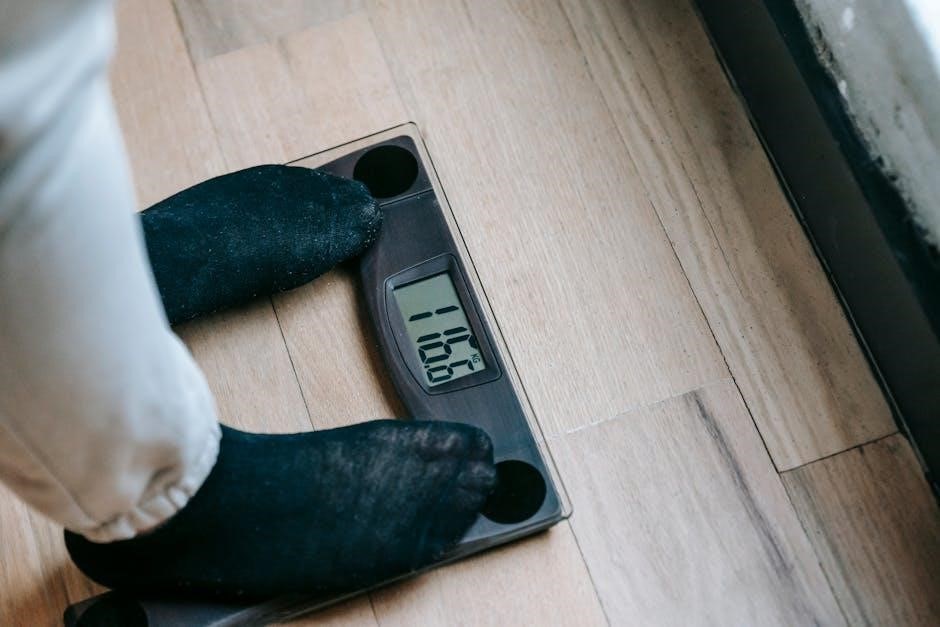
For accurate readings, place the scale on a hard, level surface. Step on with both feet, distributing weight evenly, and remain still until a reading appears.
Proper Placement for Accurate Readings
Achieving precise weight measurements hinges on proper scale placement. Always position your Weight Watchers scale on a firm, level surface – avoid carpets, rugs, or uneven flooring. These can cause instability and inaccurate readings. Hard surfaces like tile or wood are ideal.
Ensure the scale is away from walls or other obstructions, allowing ample space for stable operation. Avoid areas with significant temperature fluctuations or drafts, as these can potentially affect sensor accuracy. Consistent placement is key; moving the scale frequently can lead to variations in readings.
Remember, a stable and level foundation is crucial for reliable weight tracking.
How to Weigh Yourself Correctly
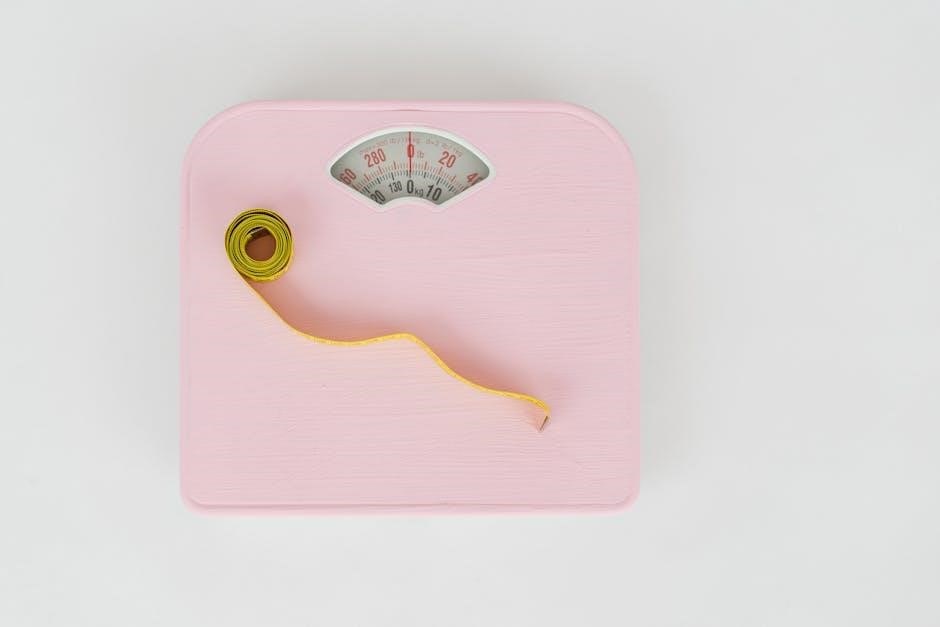
For the most accurate results, weigh yourself at the same time each day, preferably in the morning after using the restroom and before eating or drinking. Wear minimal clothing – consistency is paramount. Step onto the scale with your weight evenly distributed, standing still with your feet flat.
Avoid shifting your weight or talking while being weighed. Ensure the scale displays a stable reading before recording the number. If using a Bluetooth-enabled scale, allow sufficient time for data synchronization with the Weight Watchers app.
Remember, consistent technique yields the most reliable tracking.
Understanding the Display Readings
The display on your Weight Watchers scale will typically show your current weight in pounds, kilograms, or stone, depending on your settings. Digital scales offer a clear, numerical readout, while analog scales use a needle pointing to your weight.
Some advanced scales display additional metrics like body fat percentage, muscle mass, or water weight. These readings are estimates and should be viewed as trends rather than absolute values.
Pay attention to any indicator lights or symbols, as they may signal low battery or connectivity issues.

Troubleshooting Common Issues
Common problems include the scale not powering on, displaying inconsistent readings, or failing to connect via Bluetooth.
Simple fixes often involve replacing batteries, recalibrating the device, or restarting the app.
Scale Not Turning On
If your Weight Watchers scale isn’t powering on, begin with the simplest solution: check the batteries. Ensure they are correctly installed, observing the proper polarity (+ and -). Even if the display briefly flickers, low batteries can cause inconsistent operation.
Replace the batteries with a fresh set of the correct type – typically AAA or AA. After replacing, attempt to power on the scale again. If it still doesn’t respond, try a hard reset by removing the batteries for several minutes before reinserting them.
Inspect the battery compartment for any corrosion or debris that might be hindering contact. Clean it gently if necessary. If the issue persists, contact Weight Watchers support for further assistance.
Inconsistent Weight Readings
Experiencing fluctuating weight readings on your Weight Watchers scale? Several factors can contribute to this. Ensure the scale is placed on a hard, level surface – carpets or uneven floors can cause inaccuracies. Avoid placing it near walls or objects that might interfere with the measurement.
Weigh yourself at the same time each day, preferably in the morning before eating or drinking, and wearing similar clothing. Consistent conditions yield more reliable results. Also, ensure your feet are evenly distributed on the scale platform.
If inconsistencies continue, recalibrate the scale following the instructions in the setup guide.
Bluetooth Connection Problems
Trouble connecting your Weight Watchers scale via Bluetooth? First, verify Bluetooth is enabled on your smartphone or tablet. Ensure the scale is in pairing mode – consult your scale’s manual for specific instructions, often involving pressing a button. Bring the scale closer to your device during the pairing process.
Close and reopen the Weight Watchers app, and check for app updates. Sometimes, restarting your mobile device can resolve connectivity issues. If problems persist, “forget” the scale in your device’s Bluetooth settings and re-pair it.
Confirm the scale isn’t already connected to another device.

Advanced Features and Settings
Explore personalized settings! User profiles allow multiple individuals to track data, while goal setting motivates progress. Some scales also track body fat composition.
User Profiles and Memory
Many Weight Watchers scales offer the ability to create multiple user profiles, a fantastic feature for families or anyone sharing the scale. Each profile stores individual weight data separately, ensuring accurate tracking for everyone.
This prevents confusion and provides personalized insights based on each user’s progress. The scale’s memory capacity determines how many profiles can be saved; check your model’s specifications.
Setting up profiles is usually done through the Weight Watchers app, where you can assign names and potentially other details to each user. This feature streamlines the weight management journey for multiple individuals within a household.
Setting Weight Goals
Weight Watchers scales, when paired with the app, simplify the process of setting and tracking weight goals. Through the app interface, users can define their desired weight, establish a timeframe for achieving it, and monitor progress against these targets.
The app often provides personalized recommendations based on your profile and WW program plan.
Regular weigh-ins, recorded by the scale and synced automatically, contribute to a visual representation of your journey. This feature fosters motivation and allows for adjustments to your goals as needed, ensuring a sustainable and achievable path to wellness.
Tracking Body Fat Percentage (If Applicable)
Certain Weight Watchers scales offer the capability to measure body fat percentage, providing a more comprehensive assessment of body composition beyond just weight. This feature utilizes bioelectrical impedance analysis (BIA), sending a small, harmless electrical signal through the body.
The scale then estimates body fat based on the resistance encountered.
It’s crucial to maintain consistent hydration and follow pre-weigh-in guidelines for accurate readings. The app displays this data alongside weight, offering a broader perspective on health progress and supporting informed decisions within the WW program.
Maintaining Your Weight Watchers Scale
Regular cleaning with a damp cloth ensures accuracy and longevity. Prompt battery replacements are vital, and storing the scale on a level surface protects it.
Cleaning and Care
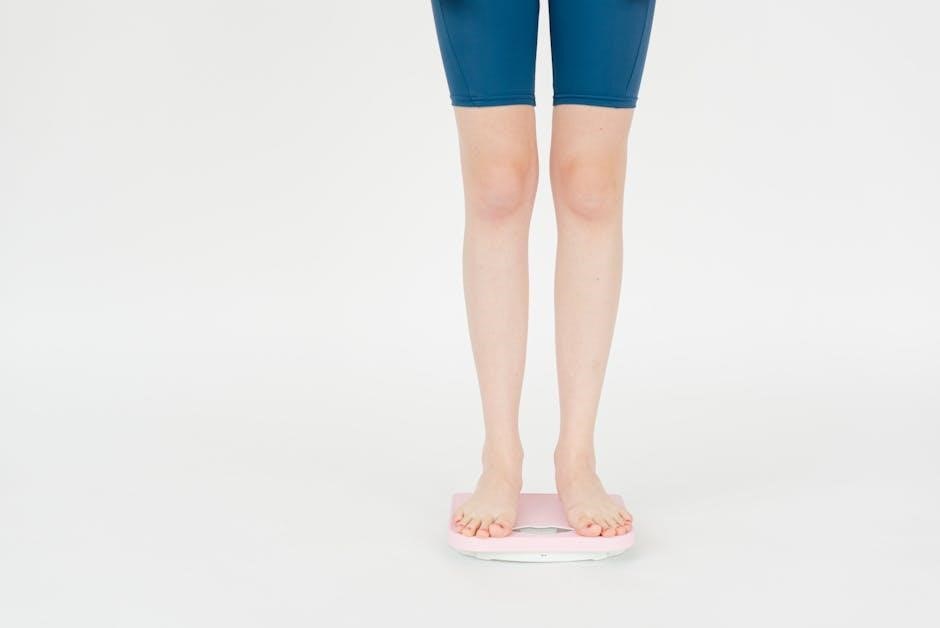
Maintaining cleanliness is crucial for accurate readings and extending the lifespan of your Weight Watchers scale. Regularly wipe the surface with a slightly damp, non-abrasive cloth. Avoid using harsh chemicals, solvents, or excessive water, as these can damage the sensors or digital display.
Ensure the scale is completely dry before use. For stubborn marks, a mild soap solution can be used, but rinse thoroughly afterward; Never immerse the scale in water. Proper care prevents corrosion and ensures consistent performance, allowing you to reliably track your weight loss journey with confidence.
Battery Replacement
Low battery indicators signal the need for replacement, typically using standard AAA or AA batteries. Consult your scale’s model-specific instructions for the correct battery type and quantity. Gently open the battery compartment, usually located on the underside of the scale, and remove the old batteries.
Insert new batteries, ensuring correct polarity (+ and -) as indicated. Close the compartment securely. Dispose of used batteries responsibly, following local regulations. Replacing batteries promptly maintains accurate readings and prevents data loss, ensuring uninterrupted tracking of your wellness goals.
Storage Recommendations
Proper storage extends your Weight Watchers scale’s lifespan. When not in use, store the scale on a flat, stable surface, away from extreme temperatures and humidity. Avoid storing it in direct sunlight or near water sources. Protect the display from scratches by placing a soft cloth over it.
Do not stack heavy objects on top of the scale, as this could damage the sensors. If storing for an extended period, remove the batteries to prevent corrosion; Careful storage ensures your scale remains accurate and reliable for consistent weight tracking.
Weight Watchers App Integration Details
Seamless syncing to the Weight Watchers app provides automatic data transfer, detailed weight history, and personalized insights for optimal progress tracking.
Syncing Data Automatically
Automatic data syncing is a core feature of Weight Watchers scales, streamlining the tracking process for users. Once connected via Bluetooth, your weight measurements are instantly and securely transferred to the Weight Watchers app, eliminating manual logging.
This effortless synchronization ensures your weight history is always up-to-date, providing a comprehensive overview of your progress. The app then utilizes this data to generate personalized insights, track trends, and help you stay motivated on your wellness journey. Consistent syncing is crucial for accurate reporting and maximizing the benefits of the WW program.
Viewing Weight History and Trends
The Weight Watchers app provides robust tools for visualizing your weight loss journey. Within the app, you can access a detailed history of all synced weight measurements, presented in clear and easy-to-understand charts and graphs.
These visual representations allow you to identify trends, track weekly averages, and monitor your progress towards your weight goals. The app also offers customizable date ranges, enabling you to focus on specific periods. Analyzing this data empowers you to make informed decisions and stay committed to a healthier lifestyle.
Using the App for Personalized Insights
The Weight Watchers app goes beyond simple data tracking, offering personalized insights based on your weight history and program participation. It analyzes your trends to provide motivational feedback and identify potential areas for improvement.
The app may suggest adjustments to your plan, celebrate milestones, and offer encouragement to keep you on track. Furthermore, it integrates with the broader WW ecosystem, providing access to recipes, community support, and expert guidance. These features transform the scale data into actionable steps for sustained success.